Tag Archives: #mysterynovel

First Draft vs. Revision: which do you prefer?

After my first novel was published, I participated in several group readings. At one event, an audience member asked each author which we preferred: writing first drafts or revision? I answered, “First drafts because I love the exploration.” If I were asked this question today, I would say, “Revision.”

What changed during the past fifteen years?

Novel writers tend to divide themselves into plotters, who outline stories before they start to write, and pantsers, who write by the seat of their pants. I’m a pantser. When I start a novel, I typically know some basics about my main characters, the book’s genre, the setting, and the inciting incident but not much more than that. I develop the characters and story in the process of writing and discover such matters as “whodunnit” along with my protagonist. Like all exploration, this is a tad unsettling — I never know if the story will hang together until I near the end of the first draft.     

With my first novel, I let the story go wherever it wanted. Each day, I continued writing from where I’d left off the previous time without a backward glance. Not surprisingly, my characters and plot went all over the place and became mired in extraneous details, but the work went quickly with this free approach. During my second draft revision, I cut large chunks of writing and made major changes, like adding and then deleting a significant character.   

While I was struggling with the third draft, I attended a speaker session on three-act novel structure, which is based on the screenwriting principle that certain types of happenings must occur at specific points in the story to make it a satisfying tale. During the first quarter, the protagonist dithers on whether or not to accept the challenge posed at the start until she finally commits to the quest, however the story defines this. Midway, there’s a reversal that changes the story’s direction. Then the action nosedives to the black moment at the 3/4 point. In movies, the protagonist typically wallows through moody music until she summons the strength to push to the story’s climax. Even classic novels, written long before movies, follow this structure. The speaker opened her copy of Pride and Prejudice to reveal the reversal in the middle of the book. Jane Austen had an instinct for story that is hardwired into the human brain.  

This talk was a lightbulb moment for me. I instantly saw how and why three-act structure works and where I had naturally applied it to my messy draft and where I’d fallen terribly short. The opening quarter was way too long. My story had a reversal but skipped too quickly to the black moment. This led me to cut tons of stuff from the first quarter, add a completely new chapter after the black moment, and make numerous other changes. This third draft took longer to write than the first one, but it was better than it would have been had I not discovered three-act structure.  

I started my second novel with structure in mind. Since I knew the book would be roughly 100,000 words, I created a structure outline that divided it into quarters of 25,000 words each. I still didn’t know what would happen in the story, but I wrote to the three major turning points – commitment, reversal, black moment. If I felt events were moving too quickly toward a turning point, I added another development to enrich the story. If events moved slowly, I eliminated something unimportant that I’d planned. For instance, I initially wanted a wedding to take place in the first quarter. When there was no space for it, I postponed the wedding to the second quarter, and then the third, and finally never. This saved me the work of extricating the wedding and its offshoots during revision. 

My first draft of this second novel was less messy than the first, and I continued the process with subsequent books. Along the way, I added new things I’d learned to create a more detailed structure outline. I still didn’t know what would happen in the story or how everything would resolve, but my first drafts required increasingly less revision. For my latest novel, A Killer Whisky, each draft became quicker and more enjoyable to write than the previous one as I developed and polished the existing material.

Last month, I finished the first draft of my current novel-in-progress—yay! I realized that I’ve become far more attentive to the writing than I was for my earlier novels. Whenever scenes fell flat or veered off in a wrong direction, I went back and rewrote them before moving on. This increased my time spent on the draft, and yet I still didn’t know if the story would work or how it would end until the last few chapters. So, my first drafts now combine the worst of both parts of the process—the uncertainty of pantsing a first draft and the attention to writing that I used to reserve for revision. It’s exhausting. But the toughest job is done (I hope), and I look forward to my new favourite part of writing novels—revision.  
Home Sweet Homicide – but please don’t try this in your own home

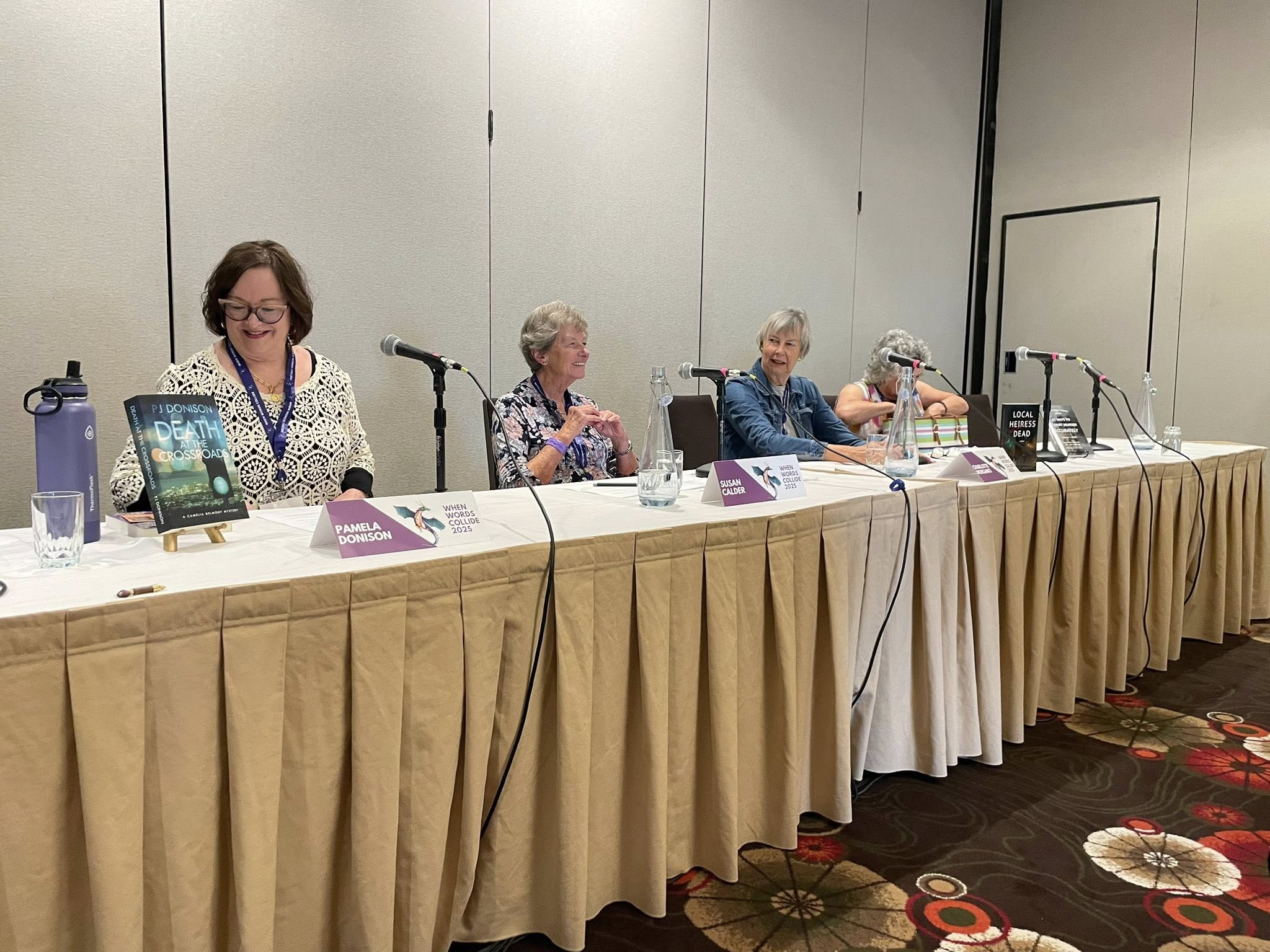
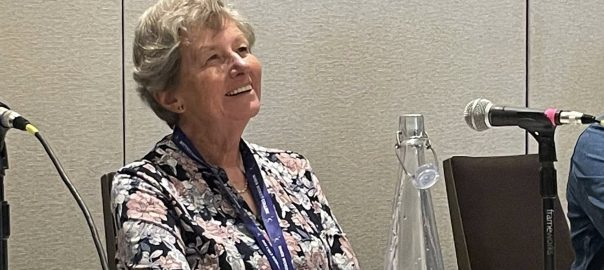
In August, at Calgary’s annual When Words Collide Festival for writers and readers I sat on a panel titled Home Sweet Homicide: the multitude of ways victims die at or near their homes. The moderator asked us panelists to describe the various methods we’d used in our mystery novels and why we’d chosen those approaches. 

I talked about my Paula Savard Mystery Series set in Calgary. Paula, my sleuth, is an insurance adjuster whose work gets her involved in crimes. In books # 2 and 3 of the series, Paula investigates a building fire and a hit-and-run collision near a victim’s home. She comes to suspect both apparent accidents were coverups for murder. Book # 4 begins with Paula investigating a theft from a bicycle store during the COVID-19 pandemic. A murder takes place in the adjacent furniture store, which has closed for the pandemic and become the home of a squatter. The victim is bashed on the head with a weapon of opportunity: a candlestick from the store’s dining room display. 

Home Sweet Homicide panel at WWC 2025

The panel’s most engaging questions related to the allure of poisons and medications thanks to our expert panelist, Lee-Anne Hancock, a retired nurse who worked at the BC Drug and Poison Information Centre. Lee-Anne told us about ordinary plants and medicines that can kill if used incorrectly — or correctly from a killer’s perspective. She noted that poisoning has been called the female murderer’s method of choice, perhaps because it is less messy and violent and doesn’t require physical strength.

As a mystery writer, I’m intrigued by the medicinal method that can easily be disguised as an accident. In two of my short stories, someone kills a relative by administering an overdose of their prescribed medicine. Even if suspicions arise and victims are autopsied, it would be normal for traces of their own medicines to show up in their bloodstreams. 

In my novel, A Killer Whisky, set in 1918 Calgary, a man dies in his living room after drinking a glass of whisky. His symptoms are consistent with the “Spanish Flu” that has struck the city and the attending doctor diagnoses the flu as the cause of death. But the man’s neighbour, who is the doctor’s receptionist, suspects someone laced the whisky with a poison or a medicine that reacted with the alcohol to produce a toxic brew. She convinces a sympathetic police detective to investigate.       

The Home Sweet Homicide panel took a light hearted approach that entertained the audience at the end of a busy festival day. Afterward, I pondered why I’ve tended to kill off my novel victims in their homes or on nearby streets rather than farther away. I came up with three thoughts. 

1. My killers and victims always know each other, which is most common with real life murders, and relatives and friends often hang out together at or near their homes.  

2. Homes are, by definition, private rather than public. There will likely be fewer potential witnesses to a crime and perhaps no witnesses. Any friends or relatives present might lie or conceal information to protect themselves, someone else, or the victim.  

3. Home is supposed to be our safe place. A home break-in feels like a violation, and a killing in our home or neighbourhood threatens our sense of security.  

My WWC 2025 panel: Home Sweet Homicide

On today’s BWL author insider blog, I talk about part of my experience at Calgary’s annual When Words Collide Festival for Writers and Readers. https://bwlauthors.blogspot.com/

WWC is a great three-day event for writers and readers of all genres of fictions. I’ve attended the festival every year since it began in 2011 and love the energy, information, networking, and more. For information about WWC 2026, check out the Alexandra Writers’ Centre Society website. https://www.alexandrawriters.org/

Do The Happy Hollisters Stand the Test of Time?

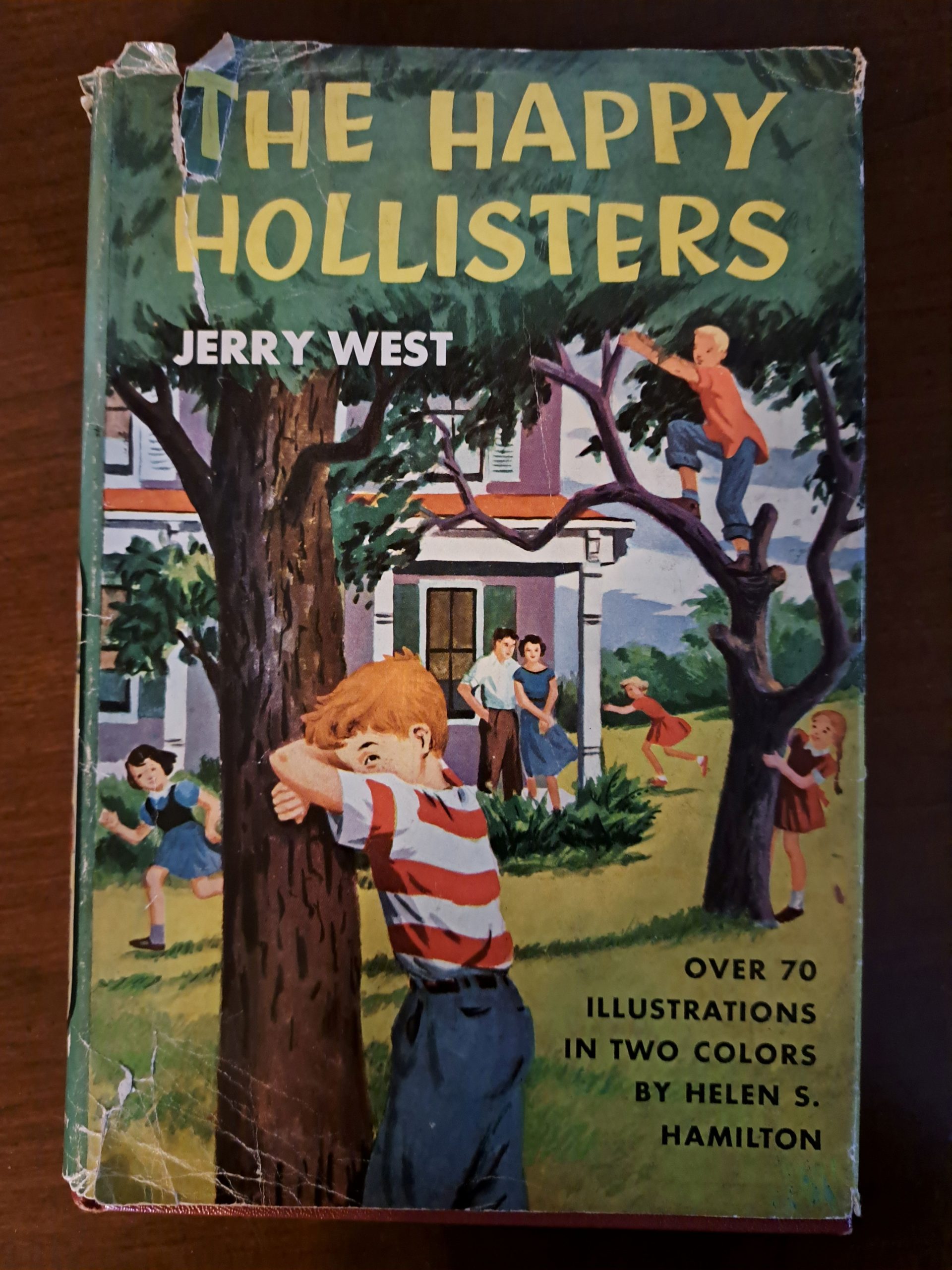
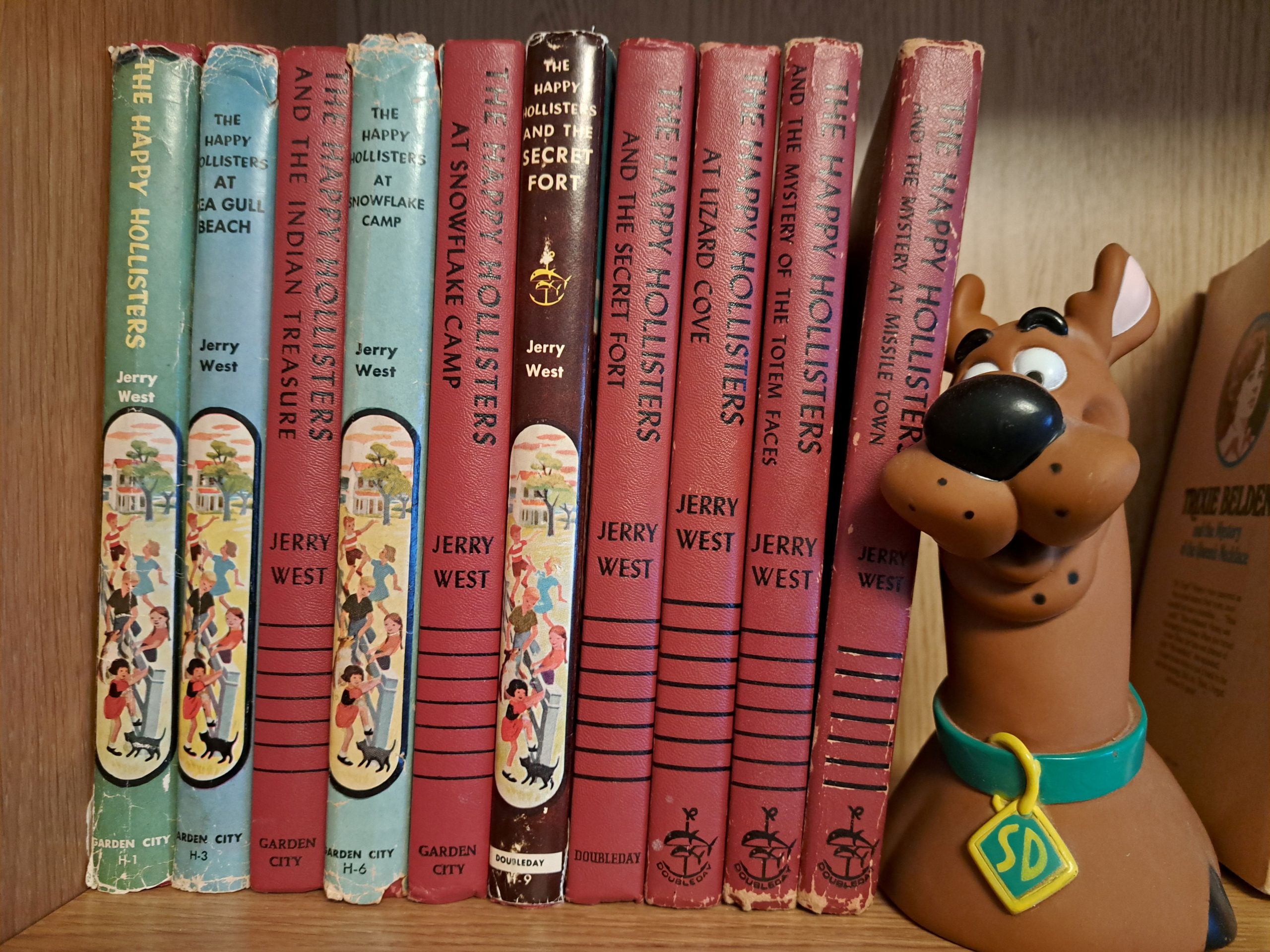
When I was a child, I devoured novels about children and teenagers who solved mysteries and crimes. The Bobbsey Twins, The Happy Hollisters, Nancy Drew, The Hardy Boys, Trixie Belden. I loved them all and passed the books down to my two sons who enjoyed reading them. Since my granddaughter loved Robert Quackenbush’s series of Sherlock Chick mystery picture books that I got from the library, I wondered if she’d like these classics for older readers now that she is almost eight.   

The Bobbsey Twins were my gateway mysteries, but I could only find one Bobbsey book in my house. My granddaughter liked reading it with her dad, so I thought of trying her on a mystery series for the next reading level: The Happy Hollisters

The Hollisters are a family of five children aged four to twelve. People they meet in the stories always comment on their happiness. The siblings never quarrel or pick on each other or complain about doing household chores. Their parents are equally happy. They don’t yell or punish their kids who constantly get into dangerous situations.  

Since the novels were published between 1953 and 1970, I decided to read the first book in the series to check that it wasn’t too dated for modern children. 

Naturally, the story reflects the times. The Hollisters live in a “white” middle class world. The two boys play Cowboys and Indians. Only the girls (cheerfully) help their mother make sandwiches for a family picnic and all three love playing with dolls, even “tomboy” Holly. The boys tend to be more rambunctious and daring than their sisters and take on the leadership roles. 

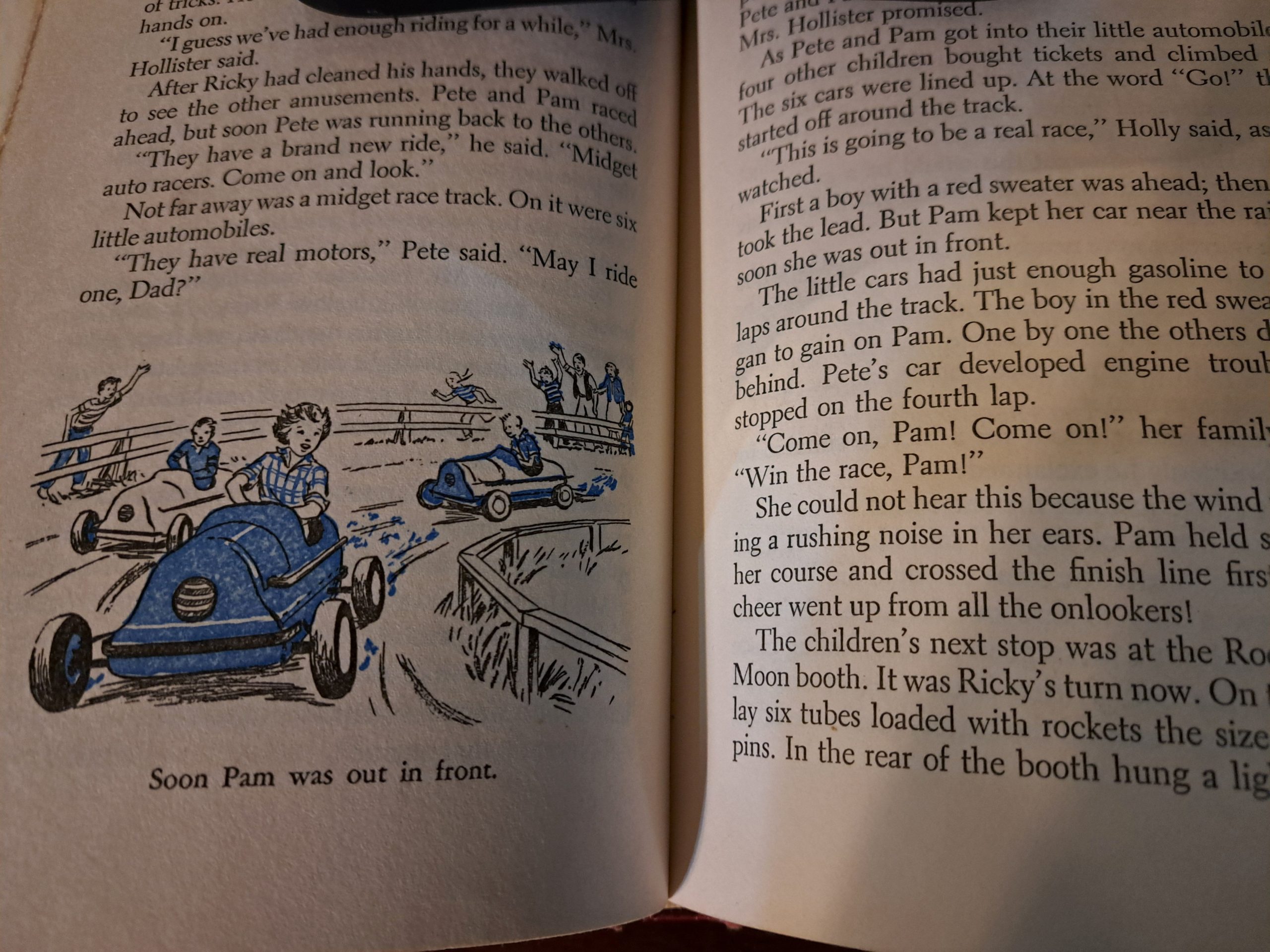
But Pam Hollister beats all the neighbourhood boys in a mini-car race, and the girls get into scrapes and contribute to solving the mystery.  

As a modern reader, what startled me most about the book was the children’s freedom. Mrs. Hollister lets four-year old Sue follow her older siblings everywhere. The Hollisters live on a lake, and Sue almost drowns. (Their intrepid family dog rescues her). When the older children build a campfire, Sue’s dress catches fire. Her brother Ricky burns his hands while saving her. Mrs. Hollister takes all of this in stride. 

The other adults are equally unprotective. When the children find the final clue to the mysterious thefts, they prudently take their information to Officer Cal. He invites them to hop in his patrol car and help capture the thief.  Children of the 1950s might have believed Cal would do this, but would today’s more protected kids find it plausible? But if they don’t, would believability matter if they’re engaged in the Hollisters’ adventures?  

In the end, my son felt the books were a bit too long for his almost-eight-year-old. We’ll wait another year to try them on her. The Happy Hollister series was out of print from 1983 until 2010, when the publisher started to reissue the novels in paperback, hardcover, digital, and audio formats. You can buy the complete 33-paperback book set for $285. https://thehappyhollisters.com/product/the-happy-hollisters-bundle-collection/ The reissued books are described as faithful to the originals. I think for modern children, the stories could use some updating. For starters, I’d made the children, their parents, and their dog a little less than totally happy.   

Successful Book Launch for A Killer Whisky

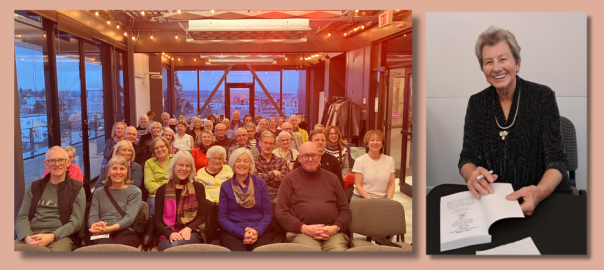
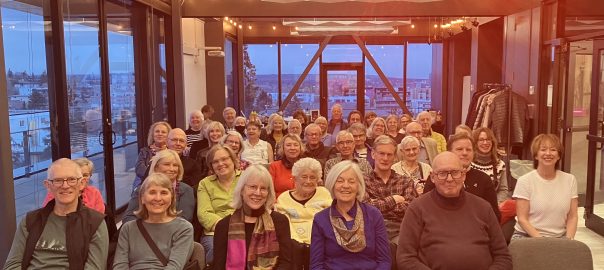
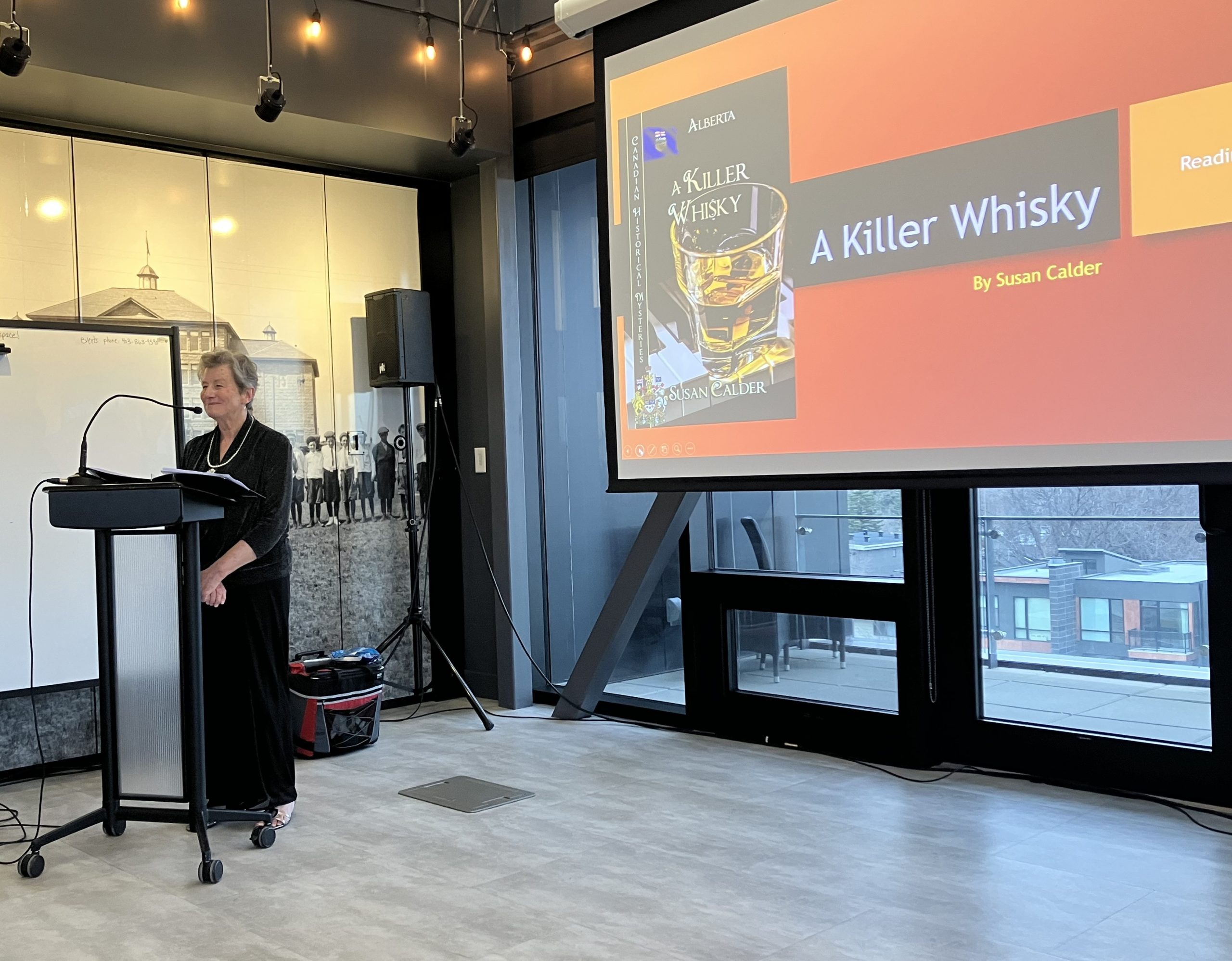
I enjoyed my book launch for my new novel, A Killer Whisky, on Tuesday night. The weather co-operated with relatively mild temperatures and a hint of sunshine. Views from the Treehouse at cSPACE Marda Loop were lovely. It was especially great to see so many smiling, supportive faces and chat with newcomers and friends.

As part of the festivities, we offered “wee drams” of whisky and whisky cocktails named for some of A Killer Whisky’s characters. The most popular cocktail was “Katharine’s Patriotic Canadian Maple Whisky Sour.” Here’s the simple recipe:

Ingredients – yields one serving

1.5 oz whisky

1 oz lemon juice

2-4 teaspoons maple syrup

Pinch of ground cinnamon (optional)

Instructions

Fill a cocktail shaker or mason jar about 2/3 full with ice.

Add whisky, lemon juice, maple syrup, pinch of cinnamon.

Securely fasten the lid and shake well.

Pour ice into cocktail glass.

Add maple whisky sour mixture.

Enjoy!

This was my favourite cocktail, too, but I refrained from drinking at the launch to stay alert for my discussion of how I came to write A Killer Whisky and the history that forms a backdrop to the story.

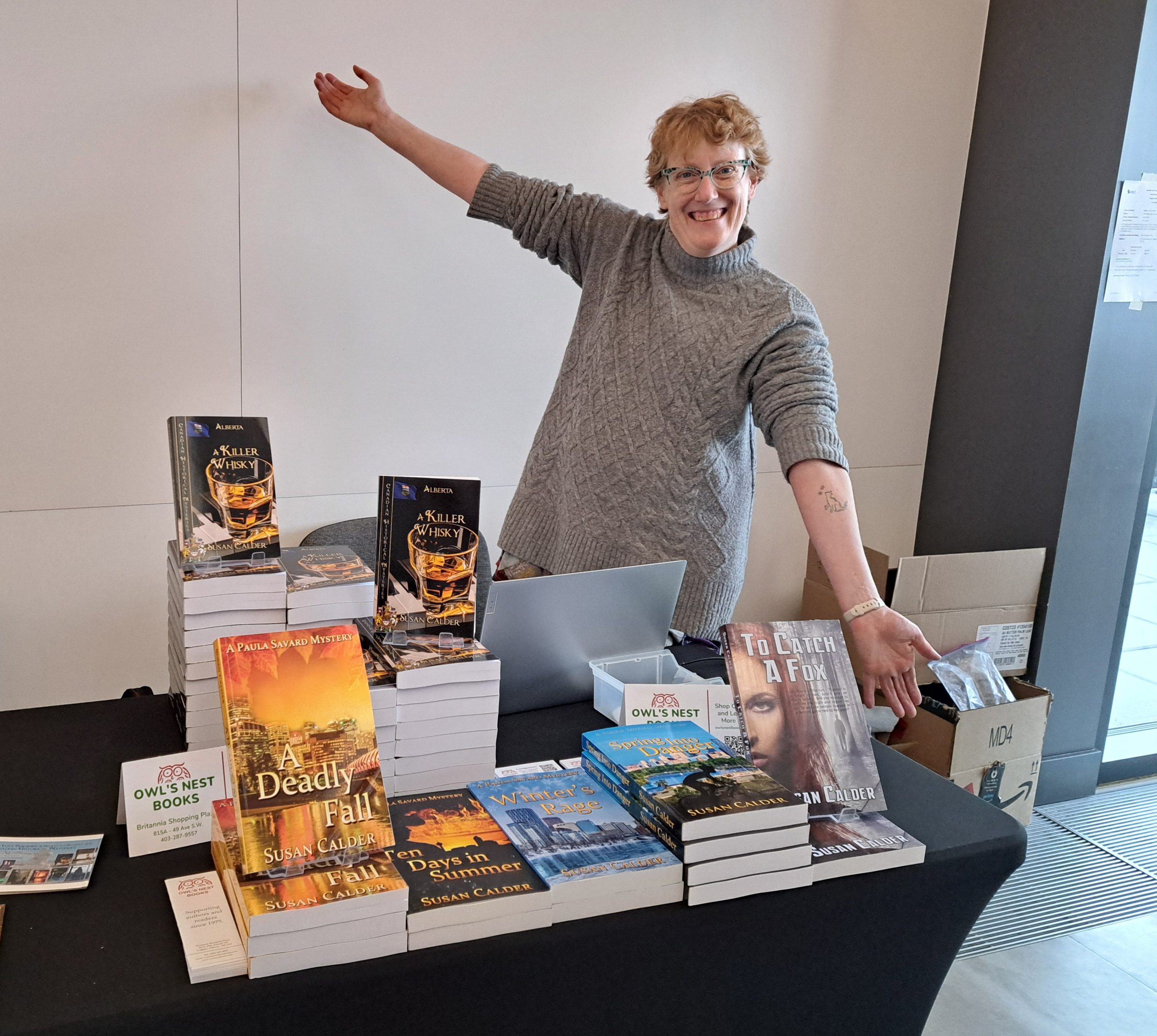
My friend and Calgary literary historian, Shaun Hunter, did a fabulous job of hosting the event. Another friend and writer Leslie Gavel kept the slide show moving smoothly. Judith from Owl’s Nest Bookstore created a fine display of my six novels.

Most people seemed to go home feeling satisfied and enthused with the event. I couldn’t ask for better launch my novel, A Killer Whisky.

A Killer Whisky visits another website

Check out BWL author J. Q. Rose’s website https://www.jqrose.com/2025/03/focus-on-books-series-guest-susan.html for her feature on A Killer Whisky. I discuss the origins of the novel and J. Q. reviews A Killer Whisky. J. Q. lives in the United States and questioned why “whisky” isn’t spelled “whiskey” in the title. She explains the different spellings in her post, and I had a character in my novel explain it so Americans won’t think I don’t know how to spell.

Preparing for the Book Launch on March 25th

My book launch for my new mystery novel A Killer Whisky is ten days away. I’ve spent the past month on preparation, and there’s still plenty to do. 

An easy task was to create a Facebook Event Page and invite about 160 Facebook friends who live in the Calgary area. So far, nine have said they’re going. This might not seem like a lot, but some will bring a friend, not all attendees confirm, and part of the purpose is to let people know my new book is available. I drop into the Event Page daily and make occasional comments to generate interest. One friend told me my Event Page shows up regularly on his Facebook feed, possibly because he presses “like” whenever the page appears. From other “likes” to the page, I notice that friends I didn’t invite have seen it. Thus, the page becomes continuous promotion for relatively little effort on my part.  

For friends who aren’t active on Facebook, I created a poster that I email to them individually. This takes more time than a mass mailout, but I think the personal approach prompts more people come. People usually reply, whether they can go or not, and it’s fun to catch up with those I haven’t seen in months or longer. I contact everyone who’s shown an interest in my writing and especially those who have attended previous launches. It helps to keep an attendance list and look back at previous launch pictures.  

In addition, I’ve sent notices about the launch to my writing groups for inclusion in their weekly or monthly newsletters to members. Few people will attend as a result of these announcements, but some might buy the book and read it if it strikes them as interesting. 

I’ve also started work on the launch program, which will centre on my PowerPoint presentation. I enjoying doing PowerPoints and work hard to find the right image or bullet points to compliment what I want to say. My talk will focus on my inspirations for writing A Killer Whisky, setting locations in Calgary, and the novel’s historical background – the story takes place during the 1918 Flu Pandemic, World War One, and Alberta Prohibition. I still need to create more slides and tweak existing ones to make the newspaper headlines, advertisements, photographs, and cartoons more effective. 

A week before the launch, I’ll get a dress rehearsal for the PowerPoint presentation at the Pincher Creek Municipal Library, where I’ll discuss the historical events relevant to an audience in Southern Alberta. Both the Pincher Creek Author Talk and Calgary Book Launch will include readings from the novel, which I still have to select, practice, and fit into the program.  

Other ingredients for the book launch event are food and drink. Since “whisky” is in the novel’s title and plays a key role in the story, I’ve pursued my idea of serving “wee drams” of whisky and whisky cocktails named for the story’s characters. A few weeks ago, I knew little about whisky cocktails other than that I’d liked Whisky Sours when I was younger. From the internet I’ve now learned about bitters, muddlers, and channel knives for making lemon twists, and I’ve found cocktail recipes that my husband and I are experimenting with this week. Our first attempt was a success! Cinnamon Maple Whisky Sour will be the signature drink for my protagonist Katharine, a Canadian patriot who supported the Great War.  

Between now and the launch on March 25th, I’ll need to shop for snack platters, lemons for my mixers and twists, and door prizes with whisky, mystery, and/or history slants. I still need to finalize arrangements with my bookseller, Owl’s Nest Bookstore. No doubt myriad details requiring attention will come up. Let’s hope for no last-minute disasters, like a snowstorm – not unusual for Calgary in March – or a key person like me coming down with the flu.  

Is the book launch worth all this time, effort, money, and stress?

I don’t know. 

But it is fun to plan a party. 

Cheers to everyone who loves writing and reading books!