Tag Archives: #Canadianmysterynovels

When Words Collide

Gearing up for Calgary’s annual Readers and Writers convention, When Words Collide, this August. https://www.whenwordscollide.org/

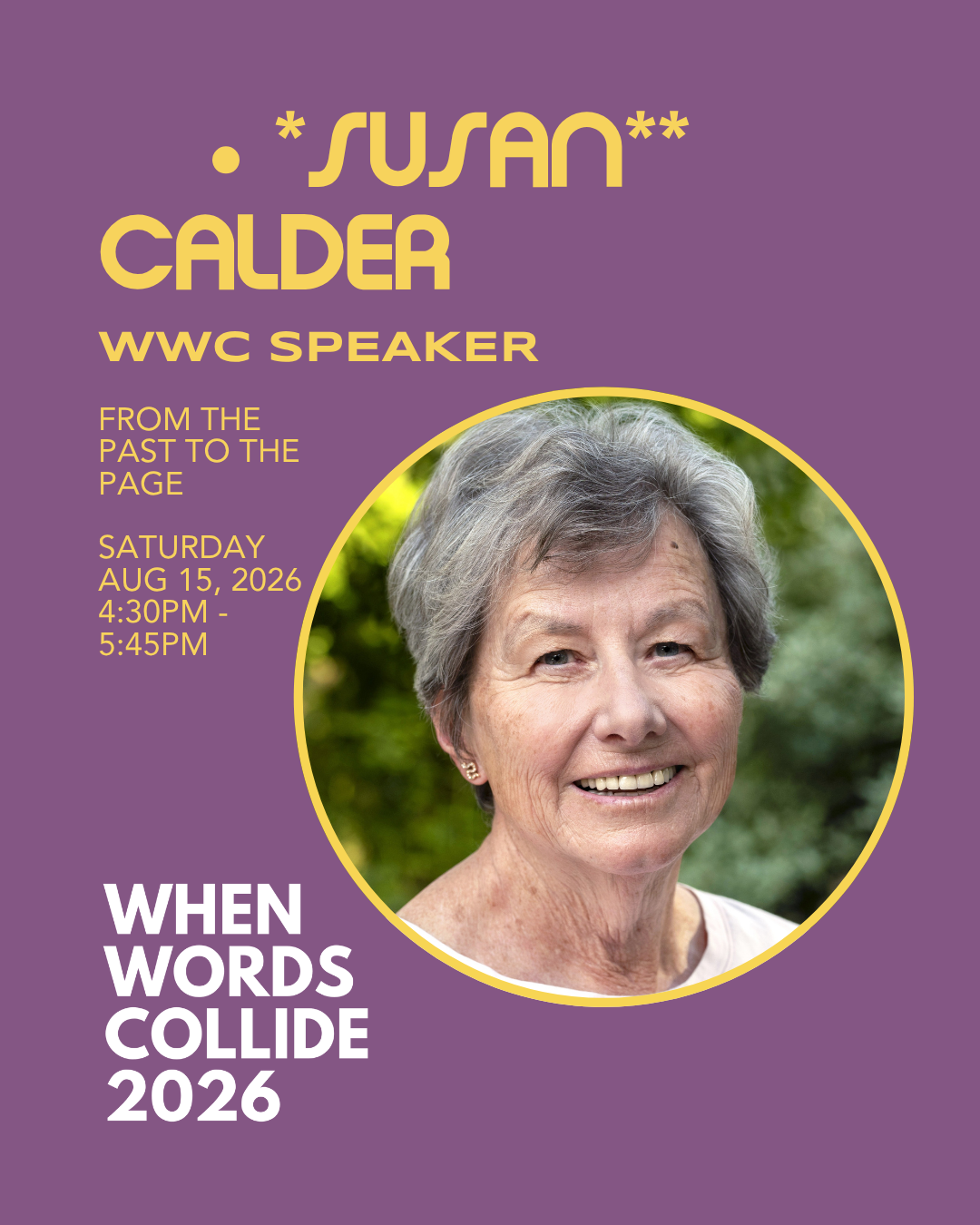
Here’s a poster I created for one of my panels. From the Past to the Page: Transforming Historical Research into Compelling Fiction. All four panelists are part of the AWCS Historical Fiction Roundtable. I’m looking forward to an interesting discussion.

First Draft vs. Revision: which do you prefer?

After my first novel was published, I participated in several group readings. At one event, an audience member asked each author which we preferred: writing first drafts or revision? I answered, “First drafts because I love the exploration.” If I were asked this question today, I would say, “Revision.”

What changed during the past fifteen years?

Novel writers tend to divide themselves into plotters, who outline stories before they start to write, and pantsers, who write by the seat of their pants. I’m a pantser. When I start a novel, I typically know some basics about my main characters, the book’s genre, the setting, and the inciting incident but not much more than that. I develop the characters and story in the process of writing and discover such matters as “whodunnit” along with my protagonist. Like all exploration, this is a tad unsettling — I never know if the story will hang together until I near the end of the first draft.     

With my first novel, I let the story go wherever it wanted. Each day, I continued writing from where I’d left off the previous time without a backward glance. Not surprisingly, my characters and plot went all over the place and became mired in extraneous details, but the work went quickly with this free approach. During my second draft revision, I cut large chunks of writing and made major changes, like adding and then deleting a significant character.   

While I was struggling with the third draft, I attended a speaker session on three-act novel structure, which is based on the screenwriting principle that certain types of happenings must occur at specific points in the story to make it a satisfying tale. During the first quarter, the protagonist dithers on whether or not to accept the challenge posed at the start until she finally commits to the quest, however the story defines this. Midway, there’s a reversal that changes the story’s direction. Then the action nosedives to the black moment at the 3/4 point. In movies, the protagonist typically wallows through moody music until she summons the strength to push to the story’s climax. Even classic novels, written long before movies, follow this structure. The speaker opened her copy of Pride and Prejudice to reveal the reversal in the middle of the book. Jane Austen had an instinct for story that is hardwired into the human brain.  

This talk was a lightbulb moment for me. I instantly saw how and why three-act structure works and where I had naturally applied it to my messy draft and where I’d fallen terribly short. The opening quarter was way too long. My story had a reversal but skipped too quickly to the black moment. This led me to cut tons of stuff from the first quarter, add a completely new chapter after the black moment, and make numerous other changes. This third draft took longer to write than the first one, but it was better than it would have been had I not discovered three-act structure.  

I started my second novel with structure in mind. Since I knew the book would be roughly 100,000 words, I created a structure outline that divided it into quarters of 25,000 words each. I still didn’t know what would happen in the story, but I wrote to the three major turning points – commitment, reversal, black moment. If I felt events were moving too quickly toward a turning point, I added another development to enrich the story. If events moved slowly, I eliminated something unimportant that I’d planned. For instance, I initially wanted a wedding to take place in the first quarter. When there was no space for it, I postponed the wedding to the second quarter, and then the third, and finally never. This saved me the work of extricating the wedding and its offshoots during revision. 

My first draft of this second novel was less messy than the first, and I continued the process with subsequent books. Along the way, I added new things I’d learned to create a more detailed structure outline. I still didn’t know what would happen in the story or how everything would resolve, but my first drafts required increasingly less revision. For my latest novel, A Killer Whisky, each draft became quicker and more enjoyable to write than the previous one as I developed and polished the existing material.

Last month, I finished the first draft of my current novel-in-progress—yay! I realized that I’ve become far more attentive to the writing than I was for my earlier novels. Whenever scenes fell flat or veered off in a wrong direction, I went back and rewrote them before moving on. This increased my time spent on the draft, and yet I still didn’t know if the story would work or how it would end until the last few chapters. So, my first drafts now combine the worst of both parts of the process—the uncertainty of pantsing a first draft and the attention to writing that I used to reserve for revision. It’s exhausting. But the toughest job is done (I hope), and I look forward to my new favourite part of writing novels—revision.  
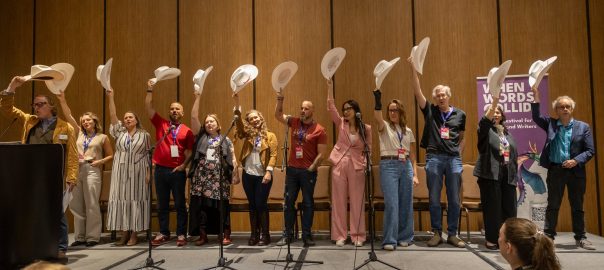
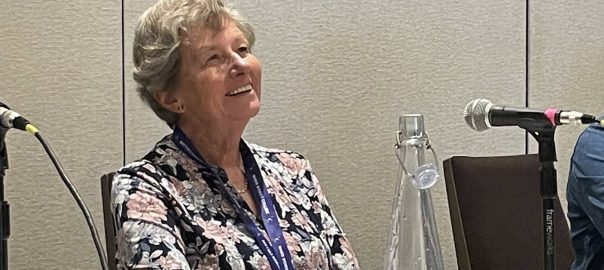
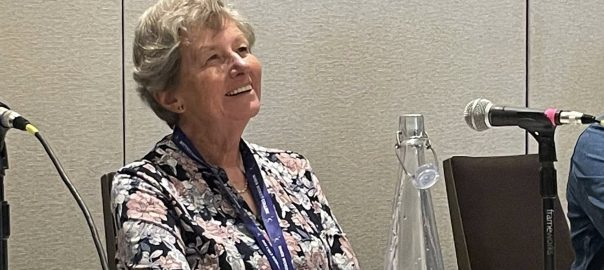
My WWC 2025 panel: Home Sweet Homicide

On today’s BWL author insider blog, I talk about part of my experience at Calgary’s annual When Words Collide Festival for Writers and Readers. https://bwlauthors.blogspot.com/

WWC is a great three-day event for writers and readers of all genres of fictions. I’ve attended the festival every year since it began in 2011 and love the energy, information, networking, and more. For information about WWC 2026, check out the Alexandra Writers’ Centre Society website. https://www.alexandrawriters.org/

May Day Celebrations

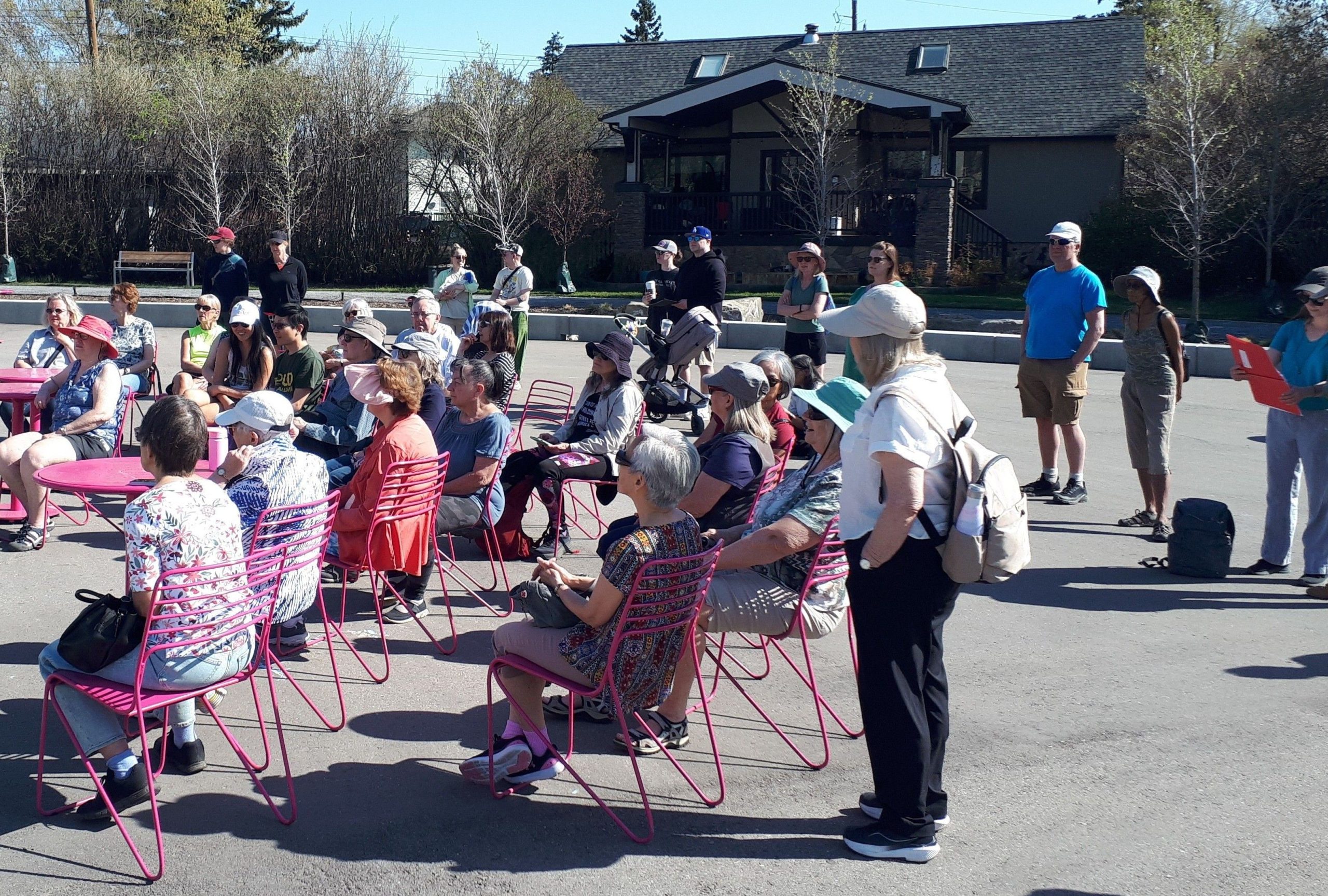
On Saturday, May 3, I celebrated May Day with back-to-back-to-back activities. The day began with sunshine, warmth, and my morning Heritage Walk in Calgary’s Tuxedo Park — my first time leading a Jane’s Walk. Forty-three people turned up at our meeting spot in Balmoral Circus Park, which conveniently provided chairs for half of the attendees. 

After my introduction and a discussion of the intersection’s history and recent transformation into a park, we set off to explore the other historical sites in the neighbourhood that I had chosen for the setting of my mystery novel, A Killer Whisky

The whole walk took 1.5 hours. Highlights included unexpected contributions by walk participants. A woman who grew up in the neighbourhood recalled that the house in the above picture used to be a Scout Hall. She rang the home’s doorbell to see if the owners could confirm this. They said they were newcomers but would contact the previous owners and send her more information. 

At our next stop, a surprise for me was a “Sold” sign in front of the blue house in this picture. 

A few weeks earlier, when I’d researched the walk, no sign was there. I had imagined this 1912 house as the residence of my novel’s protagonist. A woman in the walking group Googled the real estate listing and found the description boasted that the home was featured in a Jane’s Walk. During my research trip, I’d dropped a flyer in the mailbox advising the owners about the upcoming walk. Evidently their real estate agent viewed this as a selling point. 

Between my morning and afternoon walks, I grabbed a burger and fries at a nearby local landmark, Peter’s Drive In. After lunch, I repeated my Jane’s Walk for 40 new participants. The afternoon walk featured three guest speakers. 

The first speaker was planned. In front of the 1912 commercial building that once housed a branch of the Calgary Public Library, author and literary historian Shaun Hunter spoke about Elaine Catley, a Canadian writer who lived in Tuxedo Park in the 1920s. 

The two other speakers were spontaneous additions. When we discovered an urban planner from the City of Calgary was in the audience, we asked her explain about Heritage Protection laws, which I wasn’t familiar with.  

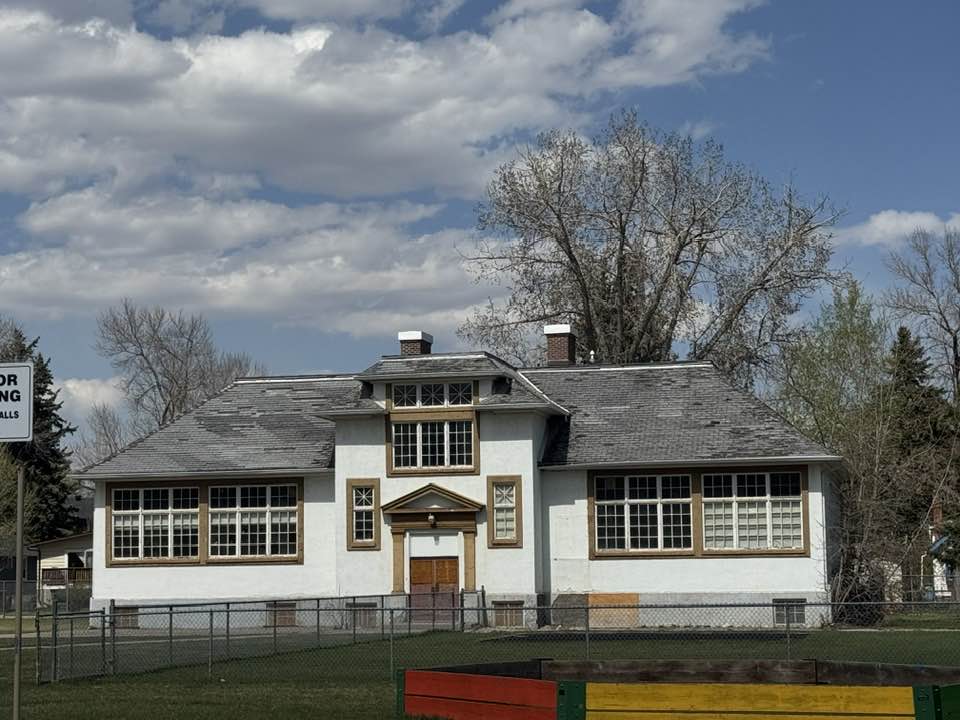
Later, a woman who’d gone to Balmoral Bungalow School shared her memories of attending the school that was built to temporarily house students during Calgary’s periods of rapid school enrollment. The school is boarded up now, although an application has been made to make it a daycare centre.  

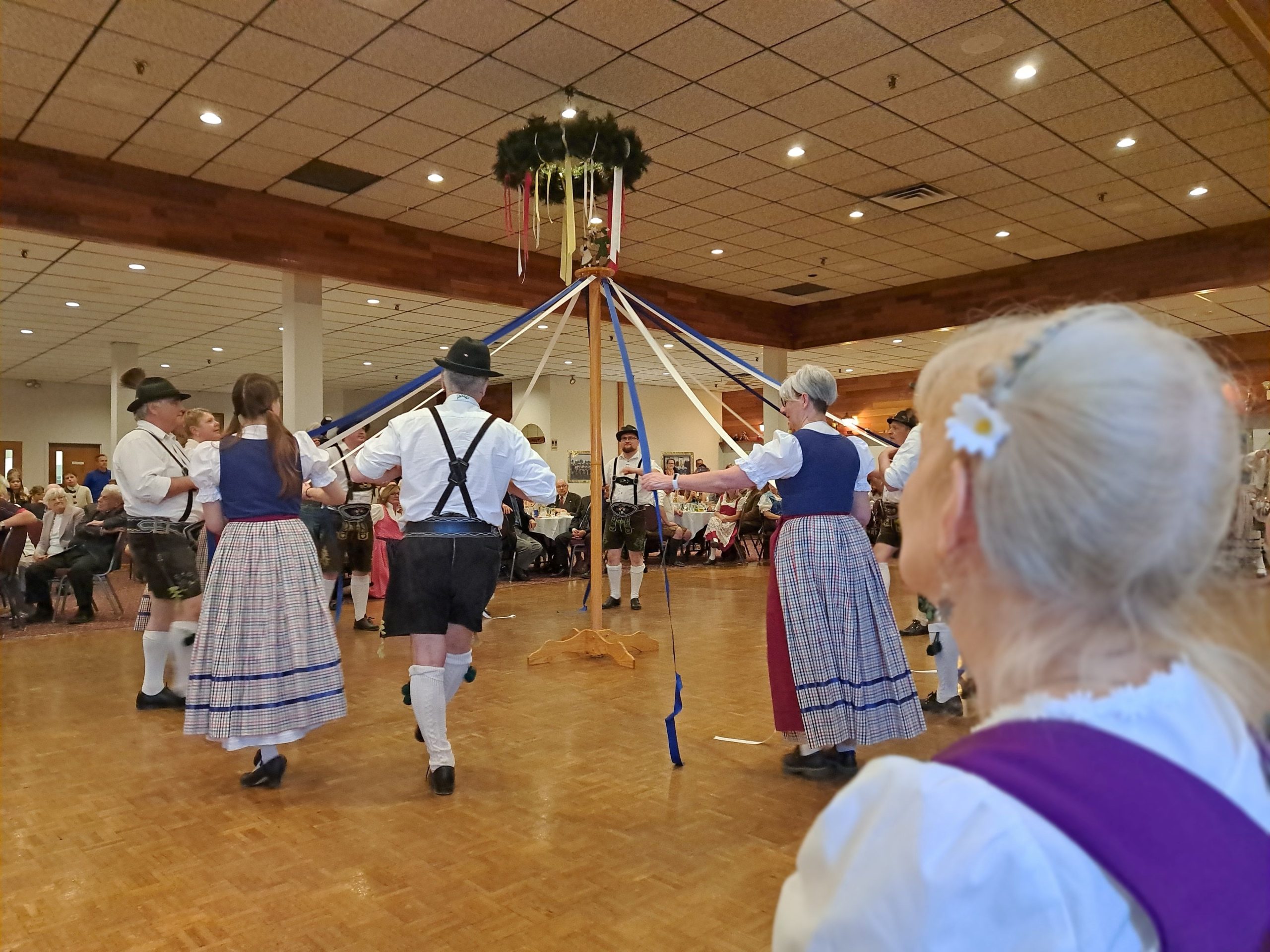
From the walk, I drove to the Austrian Canadian Cultural Centre for a dinner/dance to celebrate May Day and the Centre’s 70th anniversary. May Day, the halfway point between the spring equinox and the summer solstice, welcomes the summer growing season with the traditional Maypole dance. 

During the day, groups from Western Canada had gathered at the Centre for workshops on Schuhplattler dancing. My sister’s German dance club came from Victoria and dressed in dirndl and Lederhosen for the occasion.  

After the workshop presentations, the band continued with polkas. I was tired from my busy day, but couldn’t resist hitting the dance floor when the band segued to Elvis’ “Blue Suede Shoes.” By midnight, I was ready to crash in our hotel room. 

What a fun way to usher in summer. Happy Merry Month of May to you! 

Successful Book Launch for A Killer Whisky

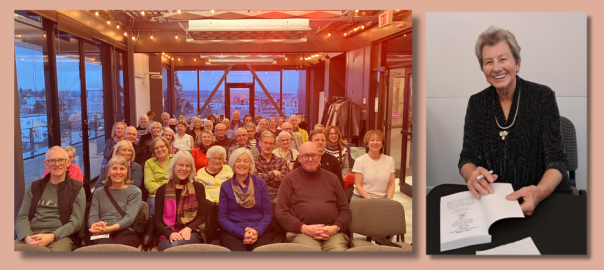
I enjoyed my book launch for my new novel, A Killer Whisky, on Tuesday night. The weather co-operated with relatively mild temperatures and a hint of sunshine. Views from the Treehouse at cSPACE Marda Loop were lovely. It was especially great to see so many smiling, supportive faces and chat with newcomers and friends.

As part of the festivities, we offered “wee drams” of whisky and whisky cocktails named for some of A Killer Whisky’s characters. The most popular cocktail was “Katharine’s Patriotic Canadian Maple Whisky Sour.” Here’s the simple recipe:

Ingredients – yields one serving

1.5 oz whisky

1 oz lemon juice

2-4 teaspoons maple syrup

Pinch of ground cinnamon (optional)

Instructions

Fill a cocktail shaker or mason jar about 2/3 full with ice.

Add whisky, lemon juice, maple syrup, pinch of cinnamon.

Securely fasten the lid and shake well.

Pour ice into cocktail glass.

Add maple whisky sour mixture.

Enjoy!

This was my favourite cocktail, too, but I refrained from drinking at the launch to stay alert for my discussion of how I came to write A Killer Whisky and the history that forms a backdrop to the story.

My friend and Calgary literary historian, Shaun Hunter, did a fabulous job of hosting the event. Another friend and writer Leslie Gavel kept the slide show moving smoothly. Judith from Owl’s Nest Bookstore created a fine display of my six novels.

Most people seemed to go home feeling satisfied and enthused with the event. I couldn’t ask for better launch my novel, A Killer Whisky.

A Killer Whisky visits another website

Check out BWL author J. Q. Rose’s website https://www.jqrose.com/2025/03/focus-on-books-series-guest-susan.html for her feature on A Killer Whisky. I discuss the origins of the novel and J. Q. reviews A Killer Whisky. J. Q. lives in the United States and questioned why “whisky” isn’t spelled “whiskey” in the title. She explains the different spellings in her post, and I had a character in my novel explain it so Americans won’t think I don’t know how to spell.