February is Psychology Month

Two-three years ago I read eight books on modern psychology as research for my novel, To Catch a Fox. I posted reviews of the books on my blog and now hate to see all that effort lost in cyberspace. Since the Government of Canada has established February as Psychology Month, I’ve decided to re-run my posts this month, with the odd updated tweak here and there. I’m finding it interesting to revisit the messages in these books. Here’s the first of the rebooted series:

I began my readings about modern psychology/psychiatry with Psychiatry: A Very Short Introduction by Tom Burns (Oxford Press 2006). The book is short, to the point and provides a good overview for not too much reading effort.

Burns’ introduction spoke to me when he remarked on the current preference to say that psychiatry is “just another branch of medicine.” The goal of such statements, he says, is to raise the status of the profession and reduce the stigma of mental illness. The problem is, psychiatry is different. There are real differences between mental and physical illnesses that won’t go away simply because we want them to.

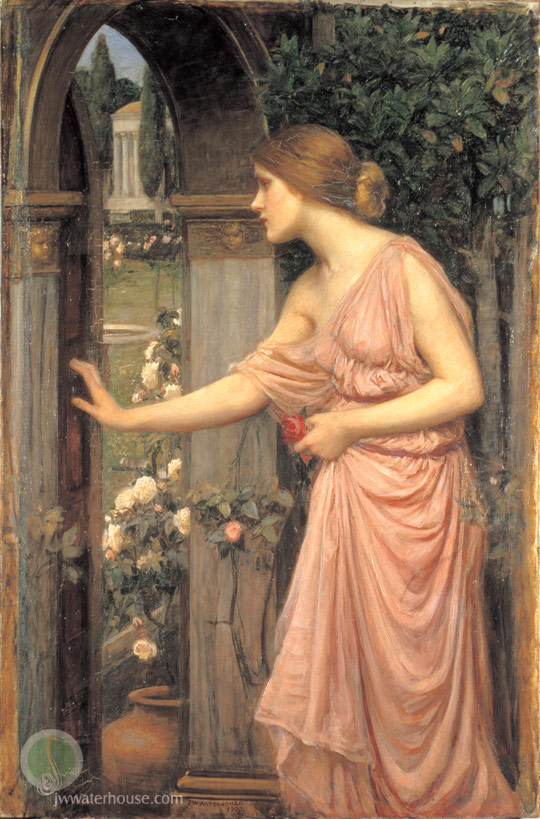
In Chapter One ‘What is Psychiatry?’ Burns points out that psyche is the Greek word for mind (It’s also the Greek word for ‘soul’ or ‘breath of life’).
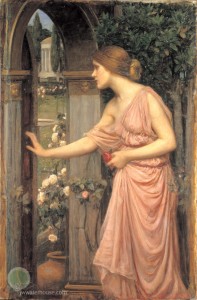
The Goddess Psyche

While the ancients pondered psychology (human thought and behaviour), the profession of psychiatry developed in the late 19th century with Sigmund Freud’s treatment of neurotic disorders, which he believed were caused by repressed unconsious thoughts.

Freud’s theories contributed much to twentieth century thinking — we still use the term Freudian slip, but his method of psychoanalysis has become increasingly marginalized in modern psychiatric practice. Today’s approach favours quicker and cheaper therapies that work at changing behaviours, with no need to understand underlying issues. Cognitive Therapy, with it’s goal of changing thinking, falls between behavioural and psychotherapy and has become one of the most successful and widely practiced therapies today. For better or worse, many turn to the self-help movement, a modern outgrowth of psychotherapy. Medication is the cornerstone of treatment for psychotic illnesses, the primary ones being schizophrenia and biopolar disorder.

What’s the difference between neurotic and psychotic? The latter involves a loss of insight into the personal origins of one’s strange experiences; an inability to reality check.

This led me to the internet, where I learned that the newer drugs developed to treat neurotic disorders like depression aren’t more effective than the older ones. Today’s drugs work better because their fewer side effects make people less inclined to discontinue them. The newer drugs are more expensive to develop and produce. Some critics claim this encourages pharmaceutical companies to push agendas to redefine conditions we once viewed as normal as an illness. While it is good to recognize certain conditions, Burns observes that the DSM (Diagnostic and Statistical Manual of Mental Disorders) definition of Oppositional Defiant Disorder sounds a lot like ‘difficult teenager.’

His book reminded me of the anti-psychiatry movement that was popular on college campuses in the 1960s and 70s. I never got past the title of Thomas Szasz’ book The Myth of Mental Illness, but discussed his message that the schizophrenia is just a different take on the world. Szasz, R.D.Laing and others battered the psychiatry profession during these decades and their views carry forward with the Scientologists. Burns suggests, in general, there is less opposition to the concept of psychology and psychiatry today, possibly due to an exaggerated faith in biological explanations.
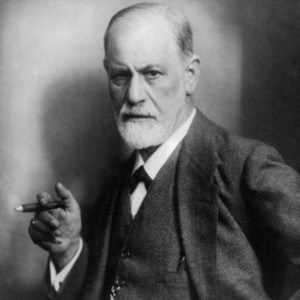
Sigmund Freud: A cigar isn’t always just a cigar
The nature vs. nurture debate is inherent in psychiatry. Freud’s theories and approach shifted the focus to nurture, even though he believed that medicines would ultimately be the cure.  The nurture view prevailed from the 1940s to 1970s. The upside of nurture is the possibility of cure; the downside is blame, especially to parents.

Why do parents blame themselves? Because we need to believe we have influence in order to invest all that time in child raising. It’s evolutionary.

The conclusion of Burns’ book brings us back to the start: the mind is not the same as the brain. Psychiatry isn’t just another branch of medicine. When people can choose, they usually want a mixture of medicine and therapy.

Mental illness is still defined by its impact on the person’s sense of self and on his or her closest relationships. As Freud put it, his goal was to enable people to work and love.
My Inner City Story

Almost released
Friday Jan 25, 2019, 5-7 p.m. I’ll be reading my short story “Gentrifying Gina” at Loft 112 and answering questions about the story and my writing.

The Loft – located in Calgary’s East Village, #112 – 535, 8 Avenue SE

Everyone welcome. Refreshments available. For $5 cash you can buy a chapbook of the story.

Multiple vs Single POV novels

For those who missed it, here’s my January 12th post on my publisher BWL’s website Author Blog.

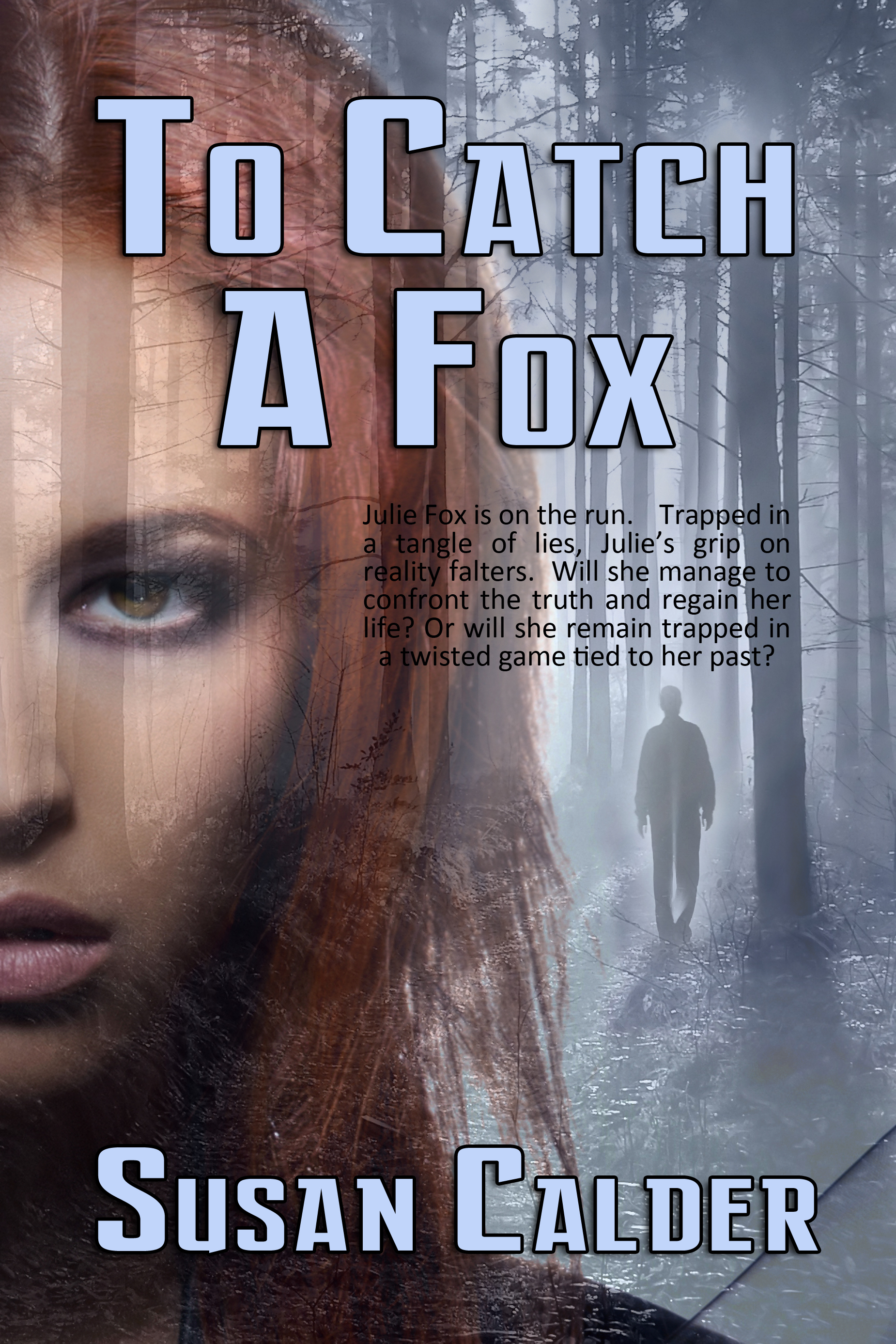
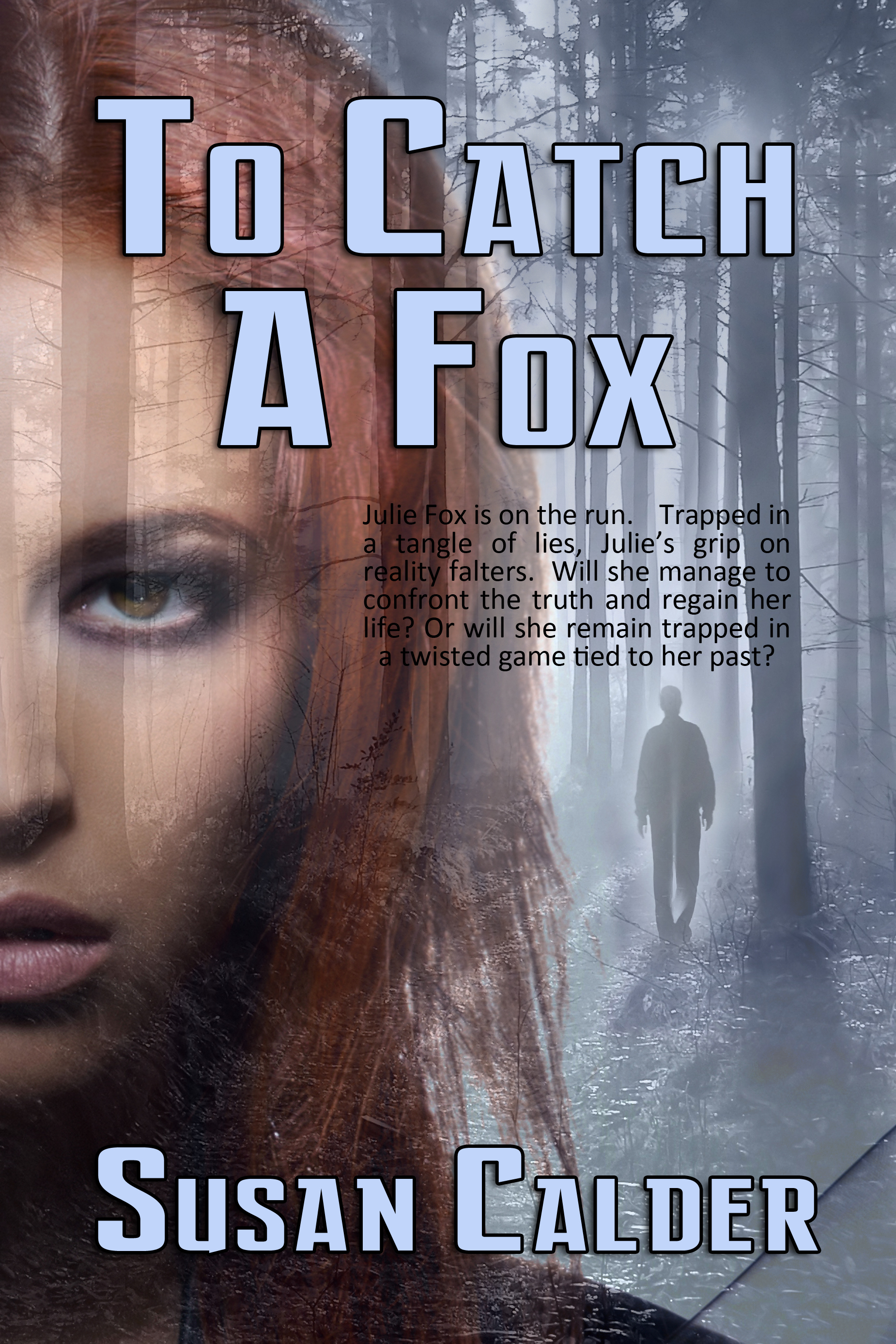
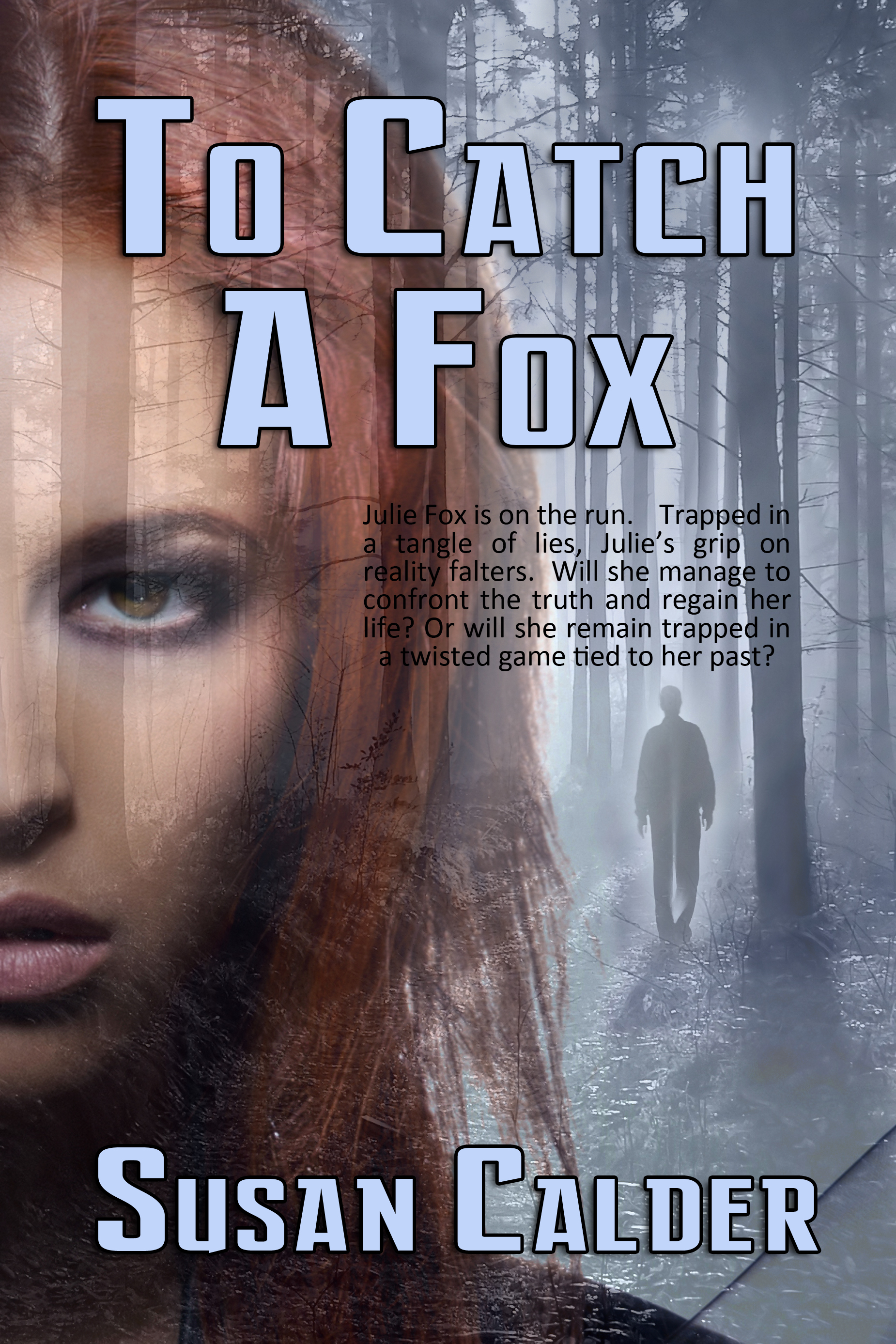
I wrote my first two novels entirely from the perspective of my sleuth, Paula Savard. My third novel, To Catch a Fox, which BWL will publish next month, shifts between five point-of-view characters. While working on this new novel, I was struck by a number of differences between writing single and multiple point-of-view stories. Here are my thoughts and observations after trying my hand at both types and reading a variety of novels.


Single viewpoint stories are great for surprise, which is why they’re the traditional approach for whodunit mystery novels. Readers only know as much as the protagonist, or a little less if she or he is smart. While reading the story, they are surprised along with the sleuth to the end. In fact, I most enjoyed writing those novels when something happened that I didn’t expect and I was surprised by a new development.


In multiple perspective, the reader knows more than the protagonist. So you lose some surprise. The trade-off is suspense, as readers grow worried or curious about how one character’s actions will affect another one. For instance, there might be a scene with the bad guys building a bomb to blow up the local theatre. The next chapter ends with the heroine heading out to the theatre that night. We have to turn the page to see what happens. In single viewpoint we’d be as blind-sided as the hero.

Both forms are equally effective at driving the plot and might be two sides of the plot-coin for any kind of story. While writing To Catch a Fox, I tried to use the strength of multiple viewpoint to heighten suspense by showing each character’s motives and deeds to be increasingly harmful to my protagonist, Julie Fox.


Writing multiple point-of-view involves making choices. How many viewpoint characters should your novel have? I’ve read books that shift between a dozen or more characters. I chose to limit my narrators to five, the number I felt would produce the optimal suspense. I also wanted readers to engage with them all, so I introduced him or her early in story, made sure each one appeared regularly and gave each a story arc that peaked in the climax scene. My five narrators were an effort to juggle, but fun.


Do you start a new chapter or scene with each change of voice? My writing instructors taught me this was essential for reader understanding. In my reading, I find that when stories shift viewpoint mid-scene, I sometimes feel jerked in and out of characters’ heads and confused by whose viewpoint I’m in. So while drafting my multiple viewpoint novel I started a new chapter with each point of view shift.


But last fall I read The Nest by Cynthia D’Aprix Sweeney, a novel that shifts between about 20 characters, often mid-paragraph. I always knew who I was with and connected to them all, and now think this fluid style works when it’s skilfully done. I’m not ready to try it in a novel, but might be some day.


My one problem with The Nest is that I wasn’t clear on who was the story protagonist. Ensemble cast novels are rare, probably because most readers prefer a main character to engage with. In Two Catch a Fox, I gave Julie’s point-of-view the most page space. She is present in the most scenes and all the other characters want something from her.


For novel structure, is it better to set up a fixed pattern of narrators, rather than have them randomly appear? With three POV characters, a chapter pattern might be A, B, C, A, B, C …, with A-the-protagonist’s chapters longer than the others. In general, I think readers like to get comfortable with a pattern, so that the structure remains in the background and they can focus on content. For the same reason, I usually prefer chapters in a novel I’m reading to be roughly the same length, so I’m not jarred by an unexpectedly short or long one.


But with five POV characters I didn’t consider an orderly pattern. Usually the story determined who would come next, but I sometimes brought a narrator in because we hadn’t heard from him in awhile. While his scene contributed to the story, he didn’t always have a lot to do or say at that point. As a result, my chapter lengths were all over the map until the last draft of To Catch a Fox. In my final revision, combining scenes into chapters helped even-out the chapter length, cut the number of chapters in half, and, I think, make it easier for the reader to get into the story.


What about headers, such as the POV narrator’s name, at each chapter start to indicate who is speaking? As a reader, I find these helpful, but I couldn’t do it easily when many of my chapters combined scenes with different narrators. I tried inserting them anyway. My editor found the headers awkward and said they weren’t needed, that she always knew quickly whose viewpoint she was in. I hope my future readers agree.

Finally, after writing both single and multiple viewpoint novels, which form do I prefer? At the moment, I’m hooked on multiple perspective, mainly because I like the variety. While working on To Catch a Fox, I’d spend a few days writing Julie, the next day with her sidekick, then her estranged husband and then the novel antagonist, before returning to my heroine, Julie Fox.